Electric Vehicle Technology
Electric vehicle technology is at a pivotal moment, marked by significant advancements in various domains. Battery innovations, particularly solid-state options, promise increased energy density and longer ranges. Meanwhile, the development of charging infrastructures is crucial for mainstream adoption. Innovative vehicle designs enhance both performance and sustainability. However, the broader implications of these changes on consumer behavior and environmental impact warrant further exploration. What does this mean for the future of transportation?
Advances in Battery Technology
Recent innovations in battery technology have significantly transformed the landscape of electric vehicles (EVs), enhancing their performance, range, and sustainability.
Among these advancements, solid state batteries stand out due to their increased energy density, enabling longer journeys without frequent recharging.
This breakthrough not only promises to boost driving freedom but also contributes to environmental sustainability, aligning with the growing demand for efficient, eco-friendly transportation solutions.
Charging Infrastructure Developments
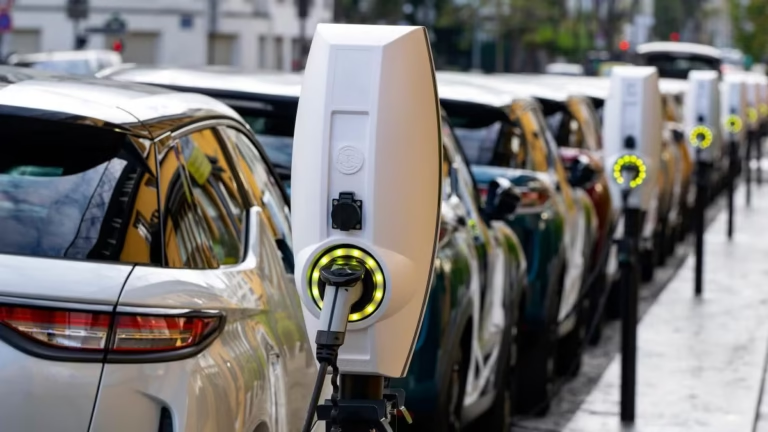
The evolution of charging infrastructure is crucial for the widespread adoption of electric vehicles (EVs), addressing one of the primary barriers to their use: range anxiety.
Recent developments in fast charging technology have significantly enhanced public accessibility, making it easier for drivers to find charging stations.
This transformation fosters a more liberated driving experience, encouraging consumers to transition to electric mobility and embrace sustainable transportation.
Innovative EV Designs
How can innovative designs redefine the landscape of electric vehicles (EVs)?
By embracing aerodynamic shapes and modular designs, manufacturers can enhance performance, efficiency, and customization.
These advancements allow for lighter vehicles that reduce drag, while modularity fosters adaptability for various consumer needs.
As the market evolves, such innovations promise to empower drivers with greater freedom, transforming their driving experience and fostering a new era in mobility.
See also: AI in Education
Environmental Impact and Sustainability
Innovative designs in electric vehicles (EVs) not only enhance performance but also play a significant role in addressing environmental challenges.
By significantly reducing the carbon footprint associated with traditional vehicles, EVs contribute to cleaner air and lower greenhouse gas emissions.
Moreover, when powered by renewable energy sources, their sustainability potential increases, fostering a future where personal freedom is harmonized with environmental responsibility.
Conclusion
As electric vehicle technology accelerates toward a greener future, it paints a vivid picture of transportation reimagined. The symphony of solid-state batteries, fast charging stations, and aerodynamic designs harmonizes to create a landscape where range anxiety fades like morning mist. Each innovation not only enhances performance but also weaves a tapestry of sustainability, reducing carbon footprints and nurturing our planet. The road ahead is illuminated by the promise of cleaner, more efficient mobility, guiding society toward a brighter, eco-friendly horizon.