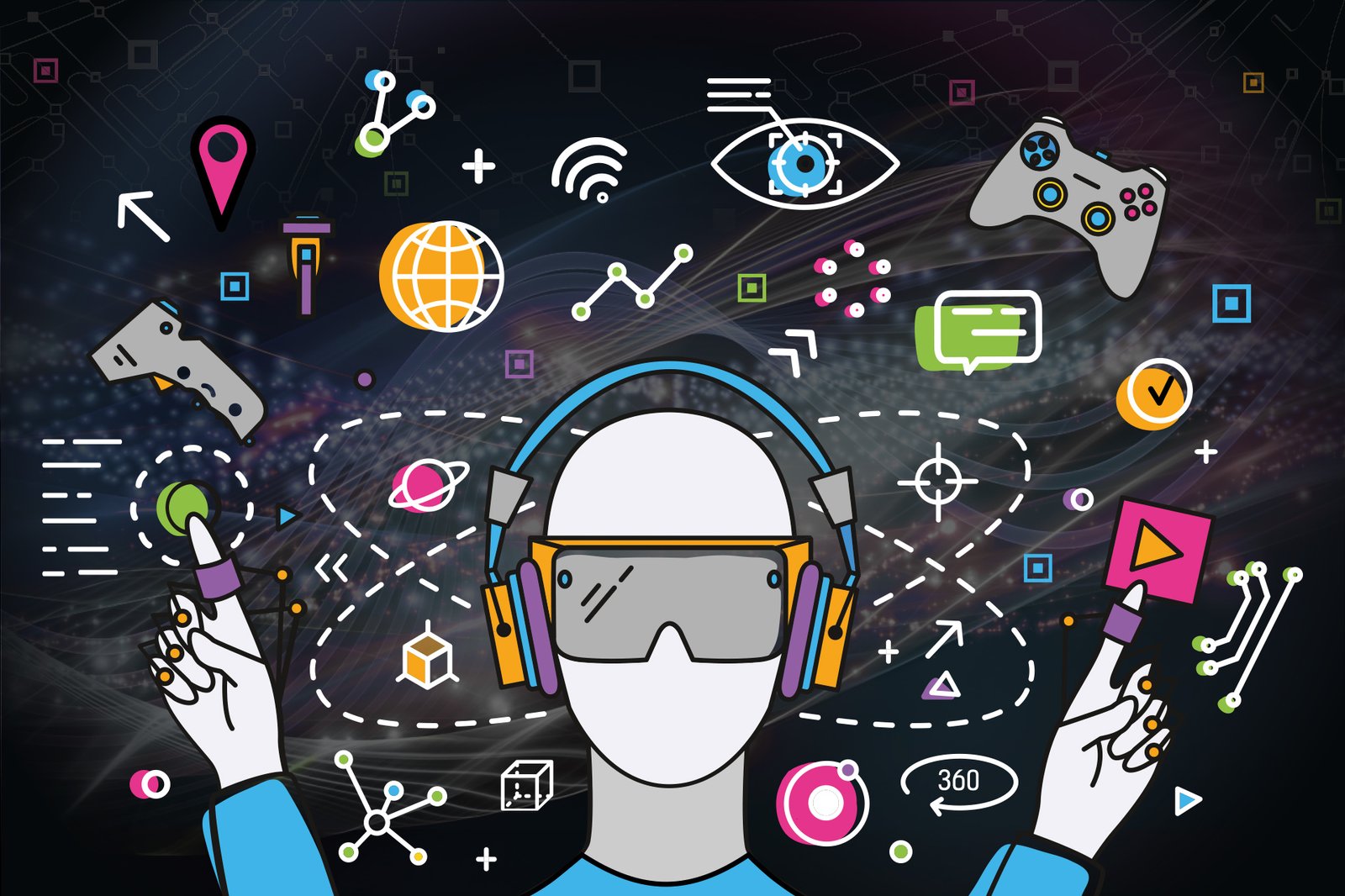
Entertainment Technology Trends
Entertainment Technology Trends
Entertainment technology trends are fundamentally altering audience engagement. Immersive virtual reality experiences invite users into dynamic narratives, while the rise of AI-generated content raises questions about originality and authenticity. Simultaneously, personalized data analytics are shaping individual preferences, influencing how content is consumed. As streaming services adapt with innovative models, the landscape of entertainment is poised for significant transformation. What implications will these shifts have for creators and consumers alike?
Immersive Virtual Reality Experiences
How are immersive virtual reality experiences reshaping the landscape of entertainment?
They are transforming virtual reality gaming by offering unparalleled interactivity and engagement.
Through immersive storytelling, creators craft narratives that envelop users in rich, dynamic worlds, allowing freedom of exploration and choice.
This evolution not only enhances player agency but also blurs the lines between traditional media and interactive experiences, redefining entertainment as a whole.
See also: Electric Vehicle Technology
The Rise of AI-Generated Content
The emergence of AI-generated content marks a significant shift in the entertainment industry, fundamentally altering how creative works are produced and consumed.
This trend raises crucial questions regarding AI ethics, particularly in preserving content authenticity.
While AI can enhance audience engagement, it also imposes creative limitations, challenging traditional notions of artistry and prompting debates about the balance between innovation and integrity in content creation.
Personalization Through Data Analytics
A growing emphasis on personalization through data analytics is reshaping the entertainment landscape, as companies leverage vast amounts of user data to tailor experiences that resonate with individual preferences.
By analyzing user preferences, businesses provide targeted recommendations that enhance engagement and satisfaction.
This trend not only fosters deeper connections but also empowers users, granting them the freedom to discover content that truly reflects their tastes.
The Future of Streaming Services
As personalization through data analytics continues to shape user experiences, the future of streaming services is poised for significant evolution.
Emerging subscription models will offer more flexibility, catering to diverse consumer preferences.
Additionally, interactive features are expected to enhance engagement, allowing viewers to influence content outcomes.
This convergence of data-driven personalization and innovative interactivity promises to redefine entertainment consumption, fostering a more liberated viewer experience.
Conclusion
As entertainment technology continues to evolve, the impact of these trends is becoming increasingly evident. Notably, a recent study found that 72% of consumers are more likely to engage with content that offers interactive elements, highlighting the demand for immersive experiences. This shift underscores the importance of innovation in maintaining audience engagement. As virtual reality, AI, and personalized analytics shape the industry, the potential for deeper connections between content and viewers promises to redefine the landscape of entertainment.